
Maltipoo Puppy Feeding Guide
Practical guidance for feeding your Maltipoo puppy, maintaining a consistent routine and making a safe transition into the new home.
A Consistent Feeding Routine for a Healthy Beginning
A young Maltipoo puppy has a small stomach and needs regular, appropriately sized meals throughout the day. Maintaining the same food and schedule during the first days at home can help reduce unnecessary digestive upset.
Our puppies are introduced to high-quality small-breed puppy food before leaving our home. We recommend that new families continue feeding the same food for a period of time while the puppy becomes comfortable in the new environment.
- Feed at consistent times each day
- Use food designed for growing small-breed puppies
- Provide clean, fresh water throughout the day
- Measure meals rather than guessing the amount
- Monitor appetite, stool quality, energy and weight
Foods Our Maltipoo Puppies Have Been Eating
Continuing with familiar food can make the move into a new home gentler on your puppy’s stomach.
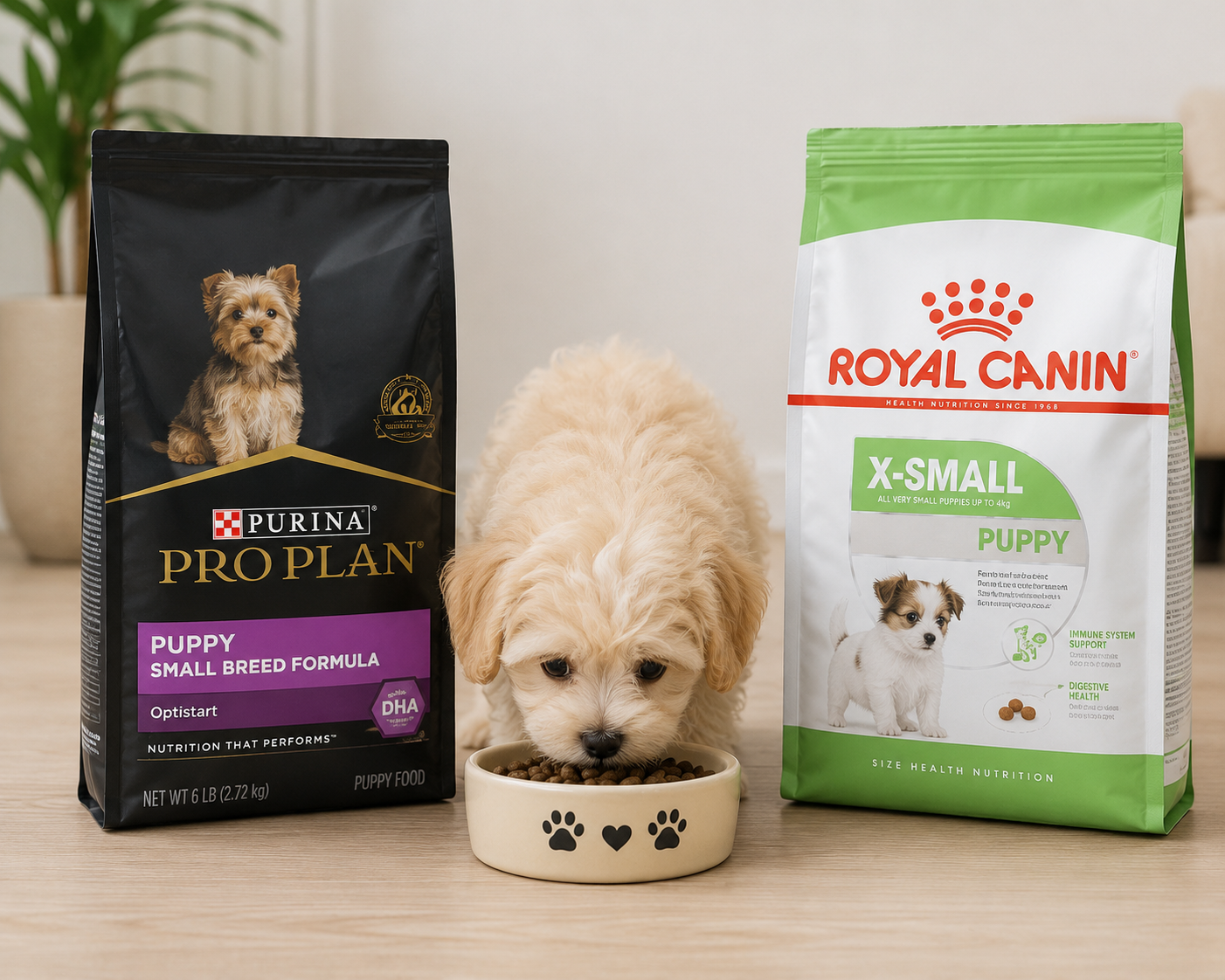
Purina Pro Plan Puppy Small Breed
Purina Pro Plan Puppy Small Breed FormulaThis is a small-breed puppy formula with appropriately sized kibble for young puppies. Continue with the same formula during the puppy’s first days or weeks at home unless your veterinarian recommends a different diet.
Royal Canin X-Small Puppy
Royal Canin X-Small Puppy Dry FoodThis formula is designed for very small puppies. It may be used for our smallest puppies when appropriate. Ask us which food your chosen puppy is currently eating before purchasing supplies.
Feeding a Two-Month-Old Maltipoo Puppy
At approximately eight to ten weeks old, a Maltipoo puppy generally benefits from three to four small meals spaced throughout the day.
| Meal | Example Time | Guidance |
|---|---|---|
| Breakfast | 7:00–8:00 AM | Offer the first measured meal shortly after waking and potty time. |
| Midday Meal | 11:00 AM–12:00 PM | Provide another small meal followed by a calm potty break. |
| Afternoon Meal | 3:00–4:00 PM | Helpful for very young, active, Toy or Teacup puppies. |
| Evening Meal | 6:00–7:00 PM | Feed early enough to allow potty time before bedtime. |
Hand-Feeding Your Puppy Sometimes
Offering part of a meal by hand can help a new puppy feel comfortable with you and can also make food useful during early training.
Build Trust
Sit calmly near your puppy and offer a few pieces of kibble from an open hand. Allow the puppy to approach without being forced.
Practice Name Recognition
Say the puppy’s name once. When the puppy looks toward you, calmly offer a piece of its normal food as a reward.
Reward Simple Commands
Reserve part of the measured meal for short training exercises such as sit, come, kennel and responding to the puppy’s name.
Still Encourage Bowl Feeding
Hand-feeding should not be the puppy’s only way of eating. Continue teaching the puppy to eat comfortably from its own clean bowl.
How Much Food Should You Offer?
The correct daily amount depends on the puppy’s current weight, body condition, activity, food formula and expected adult size.
Check the Food Package
Use the manufacturer’s puppy-feeding chart as a starting point. Remember that the amount shown is usually the total for the entire day, not the amount for every meal.
Divide the Daily Amount
Divide the total daily amount into three or four small meals rather than placing the full daily amount in the bowl at once.
Measure Every Meal
Use a proper measuring cup or kitchen scale. Measuring helps prevent accidental overfeeding or underfeeding.
Review Growth with Your Veterinarian
Your veterinarian can evaluate the puppy’s weight and body condition and recommend adjustments as the puppy grows.
Changing to a Different Puppy Food
Avoid making an immediate food change during the puppy’s first day at home unless directed by a veterinarian.
Days 1–2
Feed mostly the familiar food with only a small amount of the new food mixed in.
Days 3–4
Increase the new food gradually while reducing the old food if the puppy’s stool and appetite remain normal.
Days 5–6
Feed mostly the new food with a smaller portion of the familiar food.
Day 7 and Beyond
Complete the transition when the puppy is eating well and has no concerning digestive symptoms.
Water, Treats and Human Food
Fresh Water
Keep clean water available throughout the day. Wash the bowl regularly and monitor whether the puppy is drinking normally.
Small Training Treats
Use tiny, soft treats or pieces of normal kibble. Treats should supplement the diet rather than replace balanced puppy food.
Avoid Table Scraps
Fatty, salty or seasoned human foods may upset a puppy’s stomach and can encourage begging.
Keep Dangerous Foods Away
Prevent access to chocolate, grapes, raisins, onions, garlic, products containing xylitol, alcohol, caffeine and cooked bones.
Special Attention for Toy and Teacup Puppies
Very small puppies should be observed closely because they have less body reserve than larger dogs.
- Do not allow a very small puppy to repeatedly miss meals
- Confirm that the puppy is eating rather than only playing with food
- Keep meals regular during travel and the first days at home
- Avoid excessive activity immediately before or after eating
- Track appetite, energy, stool and weight carefully
- Contact a veterinarian promptly if the puppy appears weak or unwell
Frequently Asked Feeding Questions
How often should I feed my two-month-old Maltipoo?
Should I continue the breeder’s food?
Can I feed my puppy with my hand?
Should I leave food available all day?
What if my puppy does not eat after arriving?
When should I reduce the number of meals?
Questions About Your Puppy’s Feeding Routine?
Contact Tiny Hearts Maltipoos to confirm your chosen puppy’s current food, daily amount and meal schedule before pickup or delivery.
Contact Our Family